
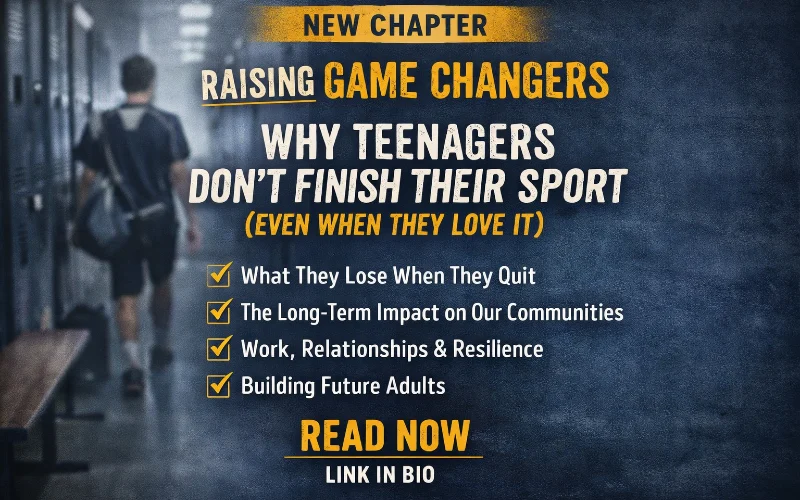
Why Teenagers Don’t Finish Their Sport (Even When They Love It)
There’s a moment in youth sports that hits differently than any other.
It’s not when a child misses a shot.
It’s not when a team loses.
It’s when a teenager — someone who once loved the game — quietly walks away before they graduate.
Not because they hate it.
Not because they aren’t talented.
But because they start saying:
“I have work.”
“I’m too busy.”
“I can’t manage both.”
And yes — jobs matter. Teens need responsibility and independence. But many teens aren’t leaving sports only because of their schedule. They’re leaving because sports begins to feel like stress instead of belonging. As competition increases, confidence gets shaky, pressure rises, and quitting starts to feel like relief.
A Message to Parents: Don’t Let Work Become the Easy Exit
As parents, it’s easy to support quitting because work sounds responsible. But here’s the hard question: Is your teen choosing work because they’re growing… or because they’re escaping?
Sometimes “I have work” is really code for:
- “I’m overwhelmed.”
- “I don’t feel good enough.”
- “I don’t feel like I belong anymore.”
And those are the moments teens don’t need an exit. They need support, perspective, and resilience. As a parent of young adults now, I get this more now than ever.
But parents give up too. I did. Big mistake, realized too late.
By high school, many families are exhausted — years of driving, schedules, fees, and weekends. Add the financial commitment, and it becomes easy to think:
“I’d rather them work and make their own money.”
That mindset makes sense — but it can also send a message teens don’t realize they’re absorbing:
“This isn’t worth finishing.”
It’s not too late for those that are here.
Warning!
The next half will hurt for those who have walked this road. I felt it deep as a parent and owner of a sports based organization.
But remember this is not about blame or guilt. This is about realizing, re-evaluating, resetting and changing for better future generational outcomes.
What Teens Lose When They Quit Too Soon
When a teenager quits sports, most people only see what they gain: more time, more money, fewer commitments.
But what often gets missed is what they lose.
They lose belonging.
They lose structure.
They lose mentors.
They lose a healthy outlet when stress is at its highest.
They lose a team that holds them accountable.
And they lose one of the most important lessons sports can teach:
How to finish what you start.
Why Finishing Matters (Even If They Never Play Again)
Finishing has never been about scholarships or going pro.
Finishing teaches teenagers:
- how to stay committed when things get hard
- how to balance responsibilities instead of escaping them
- how to push through discomfort
- how to lead when it would be easier to disappear
- how to keep showing up when confidence is shaky
A teen who finishes learns:
“I don’t quit when life gets difficult.”
That lesson doesn’t end at graduation. It follows them into adulthood.
Because sports isn’t something you grow out of. It’s something that grows you.
A Message to Organizations: We Can’t Afford to Lose Our Teens
To every coach, program leader, and sports organization — this matters.
When teens quit, it’s not just a roster problem.
We lose future leaders.
Future coaches.
Future volunteers.
Future mentors.
Teenagers are the bridge between childhood sports and adulthood. They are the role models younger kids look up to. And when teens disappear, younger athletes begin to believe quitting is normal — that sports is something you do “until life gets busy.”
But the teen years are often when athletes need sports the most.
It can be one of the healthiest anchors they have — a place to belong, be mentored, be challenged, and stay connected.
The Long-Term Impact in Our Communities
When teenagers quit sports too soon, communities feel it.
We notice:
- fewer teens volunteering
- fewer teens mentoring younger players
- less leadership
- less confidence in young adults
- more disengagement
And often, sports isn’t replaced with something healthier.
It’s replaced with:
- more screen time
- less activity
- more isolation
- more stress
- less structure
How It Affects Work and Relationships
Quitting doesn’t just affect sports.
Sports teaches teens how to:
- show up even when they don’t feel like it
- take feedback
- work through conflict
- stay committed through discomfort
- handle pressure
- communicate as part of a team
Those skills matter in jobs and relationships.
Without them, many teens enter adulthood with less practice in resilience, follow-through, and emotional regulation — not because they are weak, but because they left one of the best training grounds too early.
Conclusion
This isn’t about forcing teens to stay in sports forever. It’s about recognizing what sports gives them during the years when life is the most uncertain.
Teens don’t need adults who push them harder. They need adults who help them stay connected, stay confident, and learn how to balance responsibility without quitting on themselves.
Because finishing isn’t about a season. It’s about building young people who know how to keep showing up — in sport, in work, in relationships, and in life.
That’s what makes them game changers.